
How to Choose a Waterproof Mascara Manufacturer for Private Label Beauty Brands
-

 author
21st August 2026
author
21st August 2026
A private-label beauty brand should choose a waterproof mascara manufacturer by testing four connected areas: formula wear, brush performance, eye-area suitability, and development support. BAOLISHI‘s mascara combines a waterproof, buildable formula with volumizing and lengthening positioning, a flexible tower-style brush, bamboo extract, fibers, and OEM/ODM availability. That combination gives product teams a concrete starting point.
Why Waterproof Mascara Needs More Than a Waterproof Claim
Formula Performance and Wear Experience
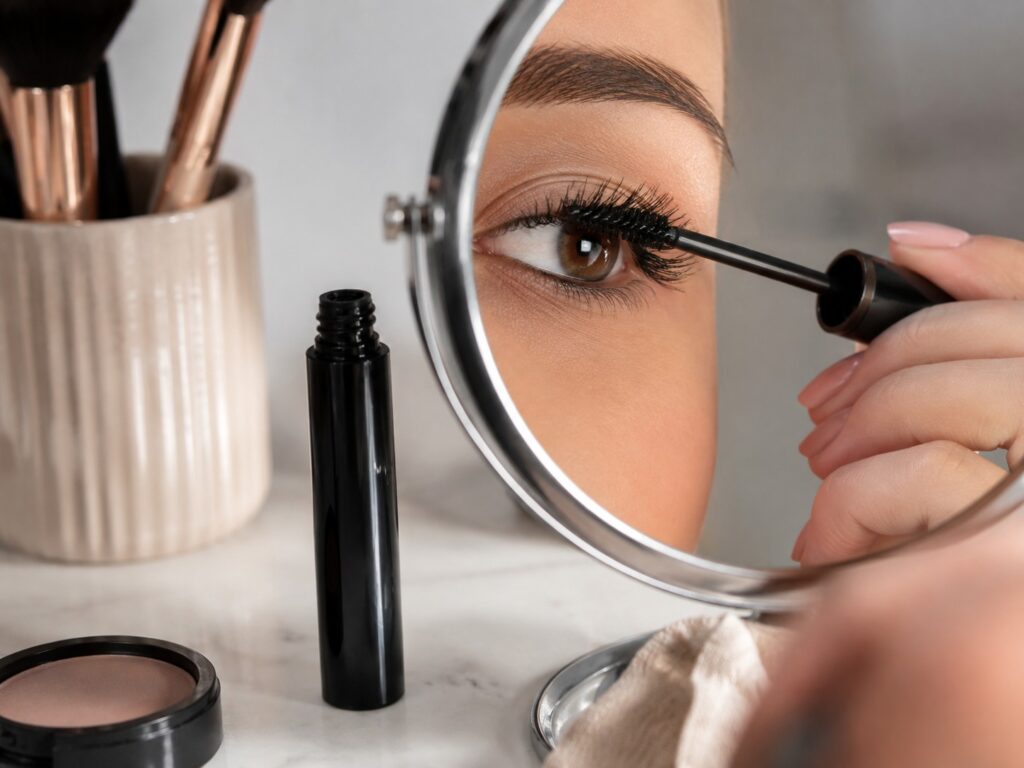
Water resistance is only one part of a mascara performance. A formula also has to deposit evenly, build without excessive weight, and keep the desired balance between volume, length, definition, and curl. For a daily product, the finish should remain comfortable while the removal process stays practical with a suitable waterproof eye makeup remover. BAOLISHI’s Y5104 is positioned as a very black or brownish black mascara with a buildable formula. It identifies bamboo extract and fibers, which gives a private-label team a clear direction for discussing lash coverage and a fuller visual effect.
Brush Design and Lash Coverage
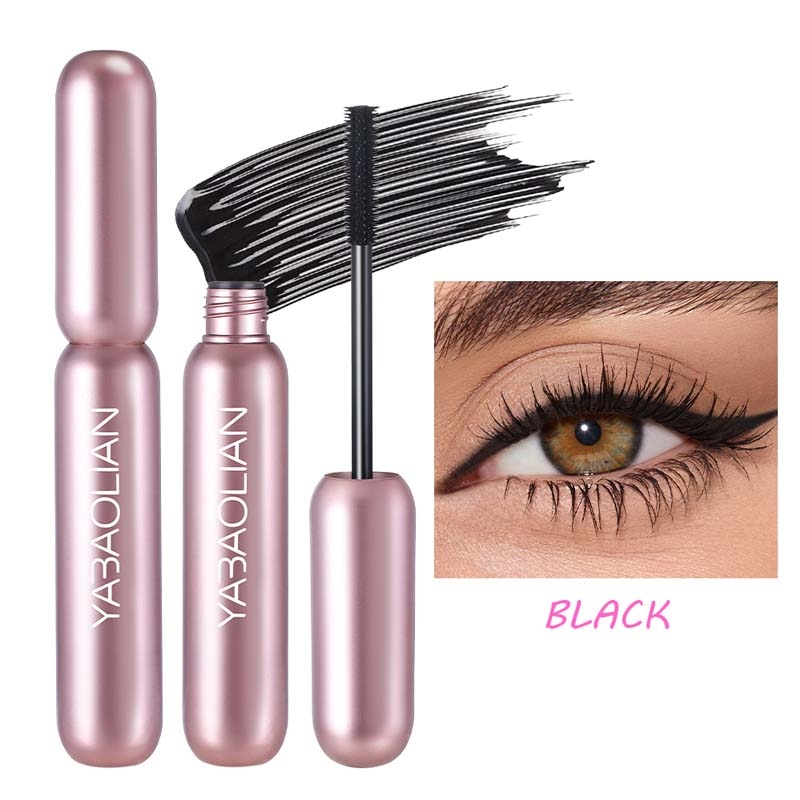
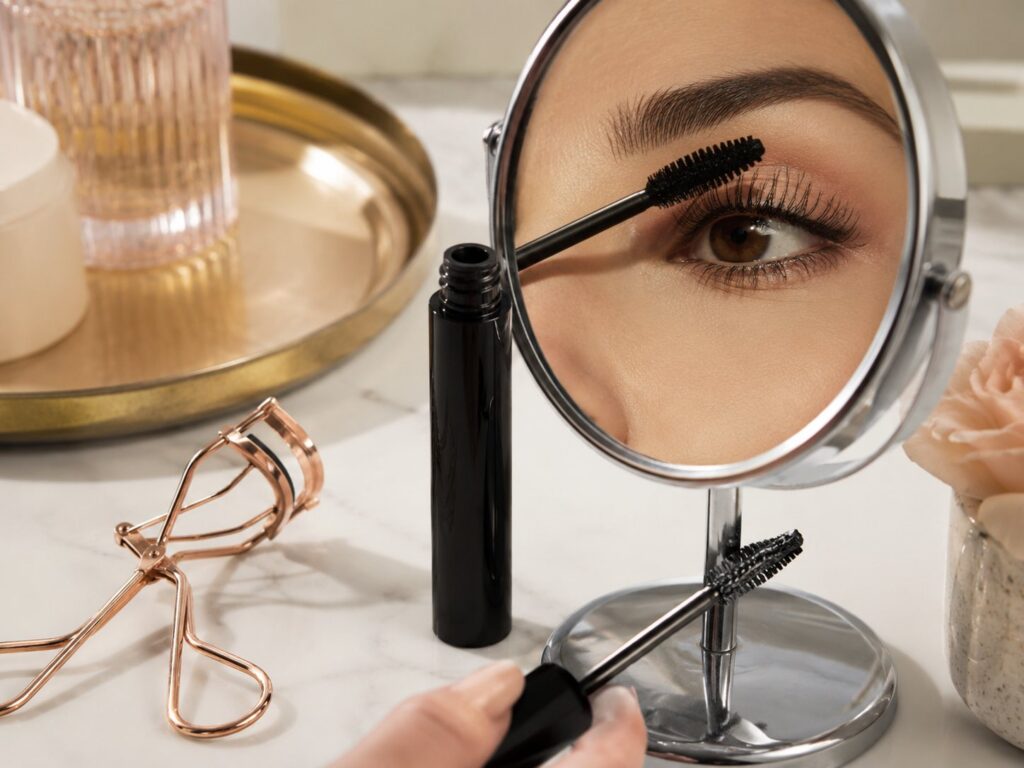
The brush determines how a formula reaches the lashes. A flexible tower-style design is intended to bend through the lash line and extend product from root to tip, so the development review should look at pickup, separation, reach into shorter lashes, and the ease of building a second coat. Brush geometry should be assessed with the actual formula rather than as a standalone component. For brands planning a high-impact eye range, this connection between brush and formula affects the product story as much as the shade. It influences whether the mascara reads as everyday definition, dramatic volume, lifted curl, or a length-focused finish on the shelf and in use.
How to Evaluate a Waterproof Mascara Manufacturer
Sample Testing and Consistency
Sample review should be repeatable. Use the same application pattern to compare lash separation, buildup, smudging, flaking, curl retention, and removal. Review the product on more than one lash type where possible, and record how the brush behaves after repeated loading so that a visually strong first pass does not hide an inconsistent everyday experience.
OEM, ODM, and Private Label Fit
OEM is a practical choice for brands that already have a clear formula, shade direction, brush design, and packaging concept. ODM may be more suitable when additional support is needed to refine the formulation, applicator, or overall product design. BAOLISHI supports both OEM and ODM development, allowing brands to start with the desired lash effect and then customize details such as the brush, tube, logo, and outer packaging.
Packaging and Merchandising for a Mascara Launch
Tube, Brush, and Brand Identity
Mascara is used close to the face, so packaging communicates quality through proportion, grip, closure feel, and the visual relationship between tube and wand. A private-label team can develop a recognizable identity through tube color, surface finish, logo placement, carton structure, and a consistent naming system while keeping the applicator practical for the intended formula. The best packaging direction supports the promise made by the formula. A length-focused product benefits from a brush that reaches the lash tips, while a volume-led product needs controlled pickup and enough flexibility for layering. These decisions are easier to refine when the manufacturer reviews the filled unit rather than approving components in isolation.
Conclusion
Choosing a waterproof mascara manufacturer is a product-development decision, not simply a search for a catalog item. Formula behavior, brush geometry, eye-area documentation, component compatibility, and repeatable sampling all shape the finished experience. BAOLISHI’s waterproof mascara offers a verifiable starting point with waterproof, buildable, volumizing and lengthening positioning, two listed shade directions, and an OEM/ODM pathway.
Contact us to explore mascara development direction for a high-impact private-label eye product concept.
FAQ
Q: What should a brand check when choosing a waterproof mascara manufacturer?
A: Check the formula’s water resistance, buildup, separation, flaking, curl behavior, and removal experience together with the brush, wiper, tube, and closure. Also review sample consistency and the exact safety or compliance documents supporting product claims. A manufacturer should be able to connect formulation, components, sampling, and private-label packaging decisions.
Q: Can BAOLISHI develop private-label waterproof mascara?
A: Yes. BAOLISHI presents an OEM/ODM route. Formula, brush, tube, logo, and outer packaging details should be confirmed through the development sample and the final documentation for the intended market.
Q: Is BAOLISHI’s waterproof mascara suitable for sensitive eyes and contact lens wearers?
A: Yes. The mascara is allergy tested, ophthalmologist tested, and suitable for sensitive eyes and contact lens wearers.
Q: How should a mascara brush be tested with its formula?
A: Test the filled unit, not the brush alone. Compare pickup, wiping, lash separation, root-to-tip reach, second-coat buildup, curl support, smudging, and removal under the same application method. If the tube, wiper, wand, or formula changes after approval, repeat the combined review because component geometry can change the final result.